

mini deep plane facelift
A “mini deep plane facelift” is not a universally standardized procedure name. It may describe a limited-incision approach that works beneath facial tissues, but the label alone does not establish what will be done. The Deep Plane Facelift is a defined facelift option; whether a more limited plan is appropriate depends on anatomy, goals, and examination.
Key Takeaways
- The term mini deep plane facelift can mean different things to different surgeons, so asking exactly which tissues are lifted and where incisions are placed matters more than the label itself.
- These approaches typically use shorter incisions than a full deep plane facelift while still working beneath the deeper facial layers.
- A limited deep plane plan may suit patients with earlier or more contained signs of aging, though candidacy depends on individual anatomy and goals.
- Discussing cost, anesthesia choices, and recovery timelines with a qualified surgeon during a consultation gives you a clearer picture than any general description.
- Comparing a limited plan against a full deep plane facelift helps you understand the trade-offs in extent of correction, recovery, and incision length.
Dr. Mark Albert is certified by the American Board of Plastic Surgery and is a Fellow of the American College of Surgeons. His training and professional background are available in his professional biography. The information below is general education, not an individual recommendation.
Is a 'Mini Deep Plane Facelift' a Real Procedure? A Surgeon's Candid Answer
The term can refer to a real surgical plan, but it is not a single standardized operation. Ask the surgeon to explain the tissue layers, incision locations, areas addressed, and limits of the proposed approach. The name should not substitute for a clear description of the plan.
Key Takeaways at a Glance
Key point: “Mini” generally signals a more limited extent, while “deep plane” describes work beneath the superficial musculoaponeurotic system, a layer of facial tissue and muscle. Combining those words does not guarantee a specific technique, recovery, or outcome. The planned operation must be explained in terms of your anatomy and goals.
A limited approach may be considered when changes are concentrated in certain areas and the surgeon judges that a smaller scope can address them. It may not suit more extensive lower-face or neck laxity. Age alone does not determine which plan is appropriate.
What 'Mini Deep Plane' Actually Means (Technique, Incisions, and Tissue Handling)
In a deep plane approach, the surgeon releases and repositions deeper facial tissues rather than relying only on skin tightening. A limited version may use shorter or more restricted incisions and address a narrower area. Incision length alone does not show how much tissue is released or repositioned.
Ask which areas the operation is intended to change, such as cheek descent, jowling, or the jawline, and whether the neck is included. A facelift does not stop aging, and results vary. Potential complications, including bleeding, infection, scarring, changes in sensation, and anesthesia-related risks, should be discussed during consultation.
How I Evaluate Whether a Limited-Incision Deep Plane Approach Is Appropriate
Dr. Albert’s evaluation considers facial structure, skin quality, tissue laxity, the distribution of visible changes, a patient’s priorities, and health history. The question is not whether a “mini” label sounds appealing, but whether a limited plan can realistically address the concerns without leaving important areas untreated.
During consultation, discuss the expected extent of correction, likely incision placement, anesthesia plan, recovery, and material risks. Ask to see examples that reflect the surgeon’s approach, while recognizing that another person’s result cannot predict yours. Candidacy, technique, recovery, risks, and outcomes require individualized clinical assessment.
How We Evaluated the Facelift Options: Selection Criteria for Comparing Mini Deep Plane, Full Deep Plane, and Mini Facelift
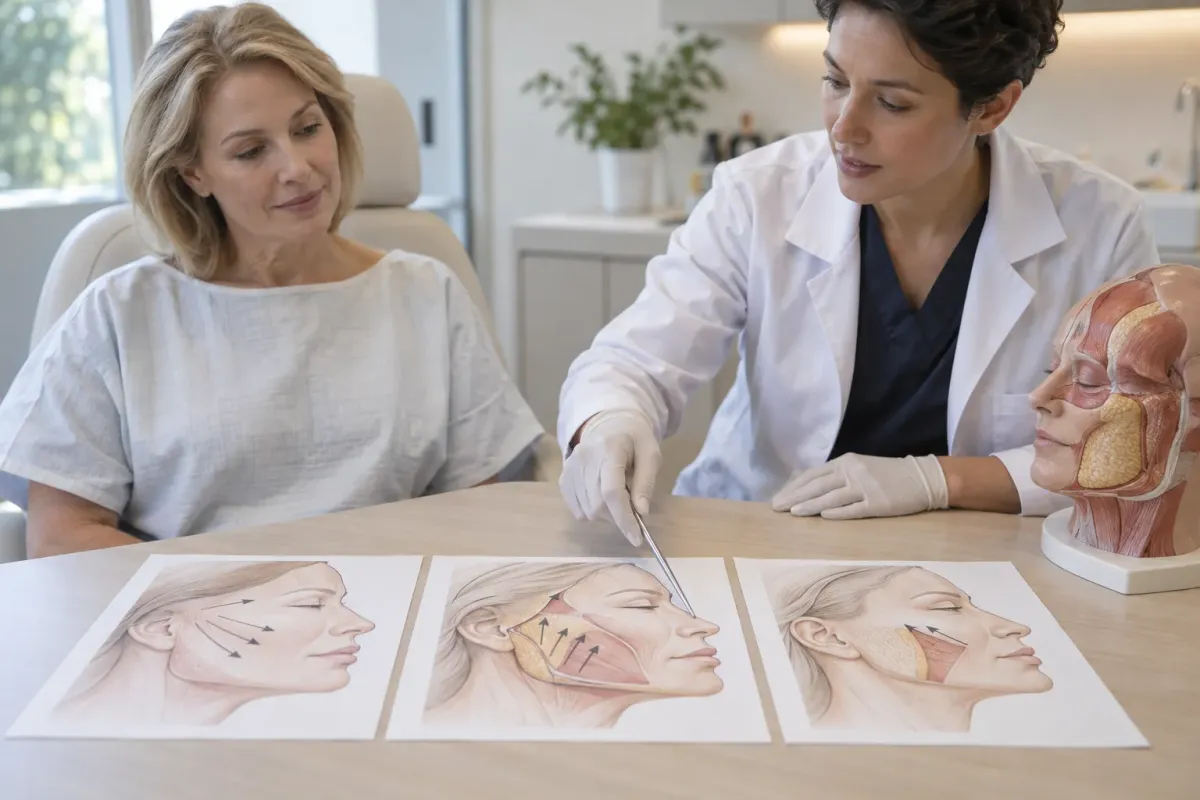
A useful comparison looks past procedure names to the operation being proposed. The options here are considered by the concerns they are intended to address, the scope of tissue release and repositioning, anesthesia planning, recovery demands, and the full quoted cost. A “mini deep plane facelift” label alone cannot establish that two surgeons are offering comparable procedures.
Why Technique Choice Matters More Than Marketing Labels
Terms such as “mini,” “limited,” and “deep plane” may be used differently by individual practices. Compare the surgeon’s explanation of the anatomical work, areas treated, and limitations. Ask how the plan relates to your face rather than assuming a familiar label means the same technique everywhere.
Dr. Mark Albert’s facelift planning is considered here in the context of his verified training and practice information, not as proof that one approach suits every patient. A consultation should leave you with a clear understanding of the proposed operation and its alternatives.
Selection Criteria: Laxity Addressed, Anesthesia, Recovery, Longevity, and Total Cost
Compare each option across five practical questions: which areas of laxity it addresses; what tissue work and incision pattern it involves; what anesthesia is proposed and why; what recovery support and follow-up are included; and what the complete fee covers. Discuss longevity as an estimate that varies, not a guarantee.
Request an itemized quote separating surgeon, facility, anesthesia, and post-operative care charges. Confirm that the plan includes the areas you want assessed, and ask what limitations could remain. These criteria help patients compare recommendations from qualified surgeons without relying on promotional labels or assuming the lowest quoted fee covers the same care.
Top Picks Compared: Mini Deep Plane Facelift vs. Full Deep Plane Facelift vs. Mini Facelift
A “mini deep plane facelift” can describe a limited plan, but the term does not identify one standardized operation. Compare it with a full Deep Plane Facelift or a traditional mini facelift by looking at the specific tissue work, facial areas addressed, and limitations proposed for you. Dr. Mark Albert’s individualized planning is the featured option here, not a claim that one technique is right for every patient.
#1 Dr. Mark Albert's Approach: Individualized Deep Plane Planning (Albert Plastic Surgery)
Best for: People seeking an assessment of facial aging and a surgical plan matched to their anatomy, goals, and desired extent of correction. Dr. Mark Albert is certified by the American Board of Plastic Surgery and is a Fellow of the American College of Surgeons. His practice offers facelift care in New York City.
This approach bases planning on examination rather than a “mini” or “full” label alone. Discussion can address whether deeper tissue repositioning is appropriate, which areas may be treated, and what limitations or risks apply. Consultation is needed to determine the technique, anesthesia plan, and expected recovery for an individual.
Option 2: Full Deep Plane Facelift: When Limited Incisions Are Not Enough
Best for: People whose concerns may involve more extensive lower-face changes and who want to discuss a broader surgical plan. A full deep plane operation involves work beneath the superficial musculoaponeurotic system, with the surgeon determining the intended tissue release and repositioning.
A broader operation may address areas beyond a limited plan, but it also involves a different surgical extent and recovery experience. The name does not guarantee a particular result or duration. Ask about incision placement, risks such as bleeding, infection, scarring, and changes in sensation, and which concerns may remain after surgery.
Option 3: Traditional Mini Facelift: What It Can and Cannot Address
Best for: People with more localized facial laxity who want to ask whether a narrower operation could address their concerns. A traditional mini facelift generally has a more limited scope than a full facelift, though technique and terminology vary between surgeons.
Its smaller scope may not adequately address more extensive jowling or neck laxity. A shorter incision alone does not establish the depth of tissue work, likely outcome, or total recovery needs. Ask which anatomical areas the plan targets and what changes it is not expected to address.
Comparison Table: Cost, Anesthesia, Recovery, Longevity, and Best For
The table gives broad comparison points, not a substitute for a surgeon’s operative plan. Cost, anesthesia, recovery, and longevity vary with the patient, surgical details, and practice. Published estimates are general context, not a personal quote or promise of results.
| Option | Typical scope | Cost context | Anesthesia and recovery | Best suited for discussion when |
|---|---|---|---|---|
| Dr. Mark Albert’s individualized planning | Plan selected after assessment; may involve a defined deep plane approach | Depends on the operation and included services | Set according to the individual plan and clinical assessment | You want recommendations tied to your anatomy and priorities |
What Does a Mini Deep Plane Facelift Cost? Transparent Line-Item Breakdown
There is no single reliable price for a “mini deep plane facelift” because the phrase can refer to different surgical plans. Cost depends on the operation’s scope, surgeon, location, anesthesia, facility, and any additional areas in the quote. Ask for a written estimate describing the proposed surgery and separating major charges.
Cost Breakdown Table: Surgeon Fee, Anesthesia, Facility, and Post-Op Care
It is not a total price, regional quote, or estimate for a specific deep plane operation.
| Line item | What to confirm |
|---|---|
| Surgeon fee | Which operation and facial areas the fee covers |
| Anesthesia | Whether the quoted fee includes the planned anesthesia and related services |
| Facility | Where surgery will take place and whether facility charges are included |
| Post-operative care | Which follow-up visits and routine care are part of the estimate |
Why Deep Plane Facelift Cost Varies by Geography and Surgeon Expertise (New York vs. Regional Markets)
Prices differ between New York and regional markets, and among practices, because surgeon fees, facility charges, and anesthesia arrangements are not uniform. Cost may also change when the plan includes a wider area of correction. A price range cannot show whether two estimates cover the same operation or follow-up.
Compare qualifications and the proposed plan, not location or price alone. The American Board of Plastic Surgery provides a way to verify board certification. Ask each practice to describe the procedure, identify excluded services, and explain follow-up arrangements before comparing totals.
Questions About Price to Ask at Your Consultation
Request an itemized written estimate and clarify its details before comparing options. A consultation with Dr. Mark Albert can help establish what operation is proposed; candidacy, technique, recovery, risks, and outcomes require individualized clinical assessment.
- Which areas and tissue layers does the quoted operation address?
- Are surgeon, anesthesia, and facility fees included?
- What post-operative visits or care are included, and what may cost extra?
- Does the estimate include any additional surgical area, or only the stated facelift?
- What risks, limitations, and possible changes to the plan could affect the total cost?
Anesthesia and Recovery: Local, Twilight, or General, Plus a Realistic Week-by-Week Timeline

Facelift surgery is not performed without anesthesia, but the plan differs by patient and operation. A Deep Plane Facelift may involve a different plan from a more limited approach. Health, surgical scope, and clinical setting inform that decision. Recovery varies too: a timeline offers context, not a prediction of an individual healing course.
Can a Mini Facelift Be Done Without General Anesthesia? Local and Twilight Options Explained
Some facelift procedures may use local anesthesia, which numbs the surgical area while the patient remains awake. Twilight sedation may accompany local anesthesia to promote relaxation, while general anesthesia involves a deeper state of unconsciousness. The appropriate choice depends on the procedure, patient health, and surgeon’s assessment. “Without general anesthesia” does not mean “without anesthesia.”
Dr. Mark Albert’s Nanolift™ page describes his proprietary approach using awake local anesthesia. This should not be generalized to every facelift or patient. Ask what anesthesia is proposed for your operation, who will administer it, what monitoring is provided, and what circumstances could change the plan. Your surgeon should explain the options and material risks before you decide.
Safety Trade-Offs of Local vs. General Anesthesia
No anesthesia method is lower-risk or best for everyone. Local anesthesia can avoid general anesthesia, but it does not remove surgical risks or guarantee comfort. Sedation and general anesthesia have their own considerations, including interactions with medical history and the planned procedure. The choice should reflect clinical assessment, not fear of one option or a promise that another is safer.
Before surgery, share your health history and all medications or supplements with your care team. Ask how anesthesia risks are assessed, who monitors you, and what support is available after surgery. The surgeon and anesthesia professional can explain which approach fits the operation and your circumstances.
Recovery Timeline: Week 1, Week 2, Month 1, and What 4 Months After Facelift Really Looks Like
Healing is gradual, and milestones are approximate. Bruising, swelling, tightness, and temporary changes in sensation can affect early recovery. Follow your surgical team’s instructions and contact them about concerning symptoms; sudden or severe symptoms may require urgent medical attention.
- Week 1: Plan for rest and follow-up as directed. Swelling and bruising may be more visible, and activity may be limited according to your surgeon’s guidance.
- Week 2: Some patients begin returning to social activities within two to three weeks, though visible signs of healing may remain.
- Month 1: Improvement continues, but residual swelling and tissue firmness can still affect appearance.
- Four months: Many people look more settled than in the early weeks, but healing can continue for several months. A “4 months after facelift” photo shows one person at one point in recovery, not a not assured outcome.
Facelift Before and After at 50: Setting Realistic Expectations
At 50, age alone does not determine the extent of surgery or the result. Facial anatomy, skin quality, tissue laxity, health, and personal goals matter. Before-and-after images can show a surgeon’s aesthetic approach, but ask about comparable starting anatomy, the operation performed, and when each photograph was taken. Images cannot forecast your result.
Frequently Asked Questions
What is a mini facelift?
A mini facelift is a limited-extent facelift that typically uses shorter incisions and addresses a narrower area of the face, such as early jowling or jawline changes. The exact technique varies by surgeon, so ask what tissue work, incision placement, and areas are included in your specific plan. Candidacy depends on anatomy and an in-person evaluation.
Is a mini deep plane facelift a real procedure?
A mini deep plane facelift can describe a real surgical plan, but it is not a single standardized operation. The label combines "mini," which signals a more limited extent, with "deep plane," which describes work beneath the SMAS layer. Ask any surgeon to explain the tissue layers, incision locations, areas addressed, and limits of the proposed approach.
What is the most natural looking facelift?
The most natural looking facelift is generally the one planned around your individual anatomy, repositioning deeper facial tissues rather than relying on skin tightening alone. Deep plane approaches are often discussed for this reason. Outcomes vary by patient, so a consultation with a qualified surgeon is needed to determine which technique suits your goals.
How painful is a deep plane facelift?
Discomfort after a deep plane facelift varies by patient, and no surgeon can promise a designed to minimize discomfort experience. Most patients receive a personalized anesthesia and pain management plan, and recovery demands should be discussed before surgery. Ask your surgeon what to expect during consultation, including follow-up care and when to report concerning symptoms.
Do people regret deep plane facelifts?
Some patients are satisfied with deep plane facelifts while others may feel their result or recovery fell short of expectations, which is why realistic planning matters. Regret often relates to unclear expectations or mismatched surgical plans. A thorough consultation covering limits, risks, recovery, and alternatives helps patients make informed decisions.
What can I do instead of a mini facelift?
Alternatives to a mini facelift depend on your anatomy and goals, and may include a full deep plane facelift, a traditional mini facelift, or a limited approach such as Dr. Mark Albert's Nanolift™ technique. Within facelift surgery, the right choice depends on the distribution of laxity and an individualized clinical assessment rather than a label.
How do I know if I need a mini or full deep plane facelift?
Whether a limited or full deep plane plan is appropriate depends on your facial structure, skin quality, tissue laxity, the distribution of visible changes, and your priorities, which requires an in-person examination. A limited approach may suit changes concentrated in certain areas, while more extensive lower-face or neck laxity may call for a broader plan. Age alone does not determine candidacy.

